A beach that holds two waters apart
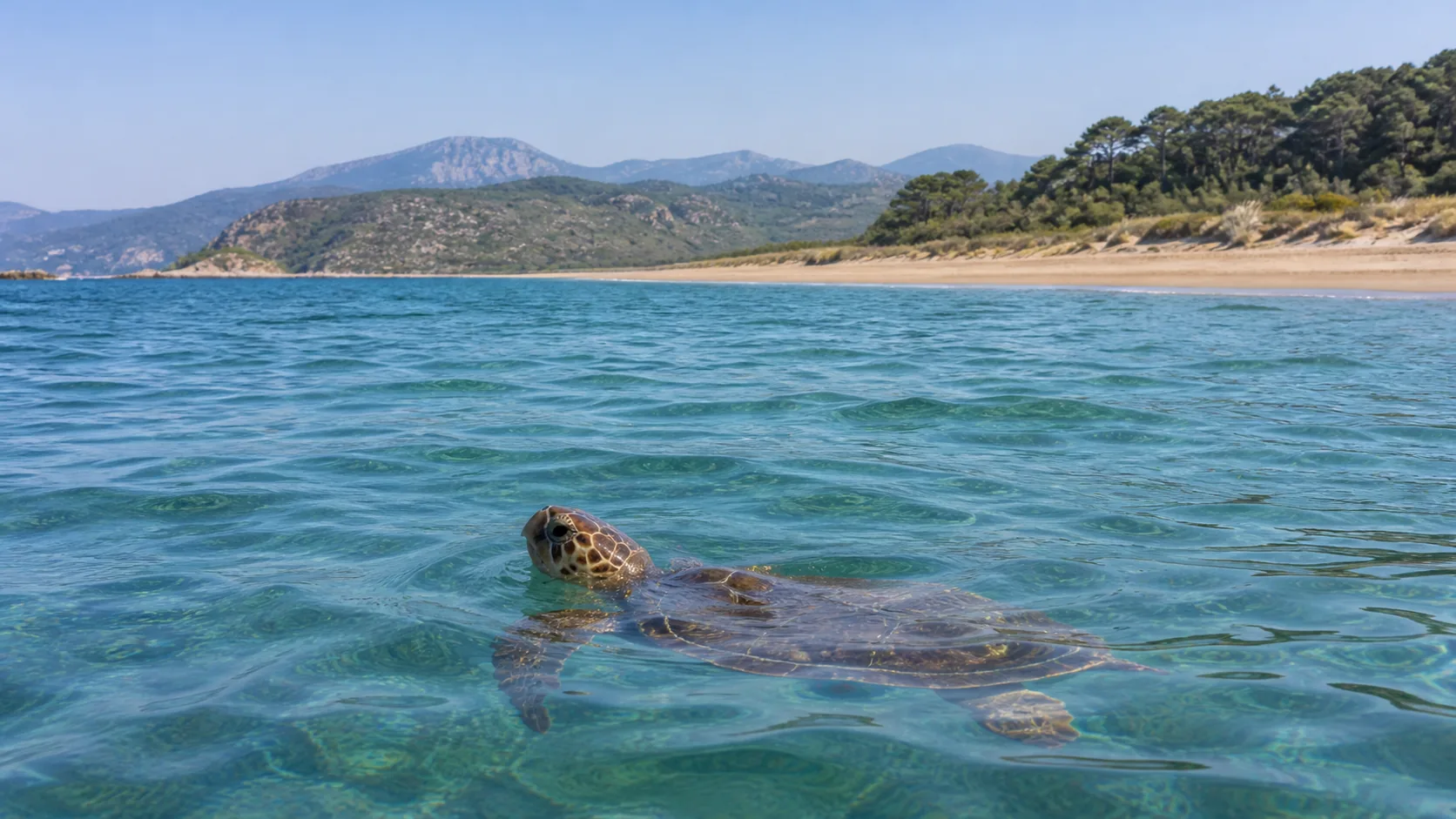
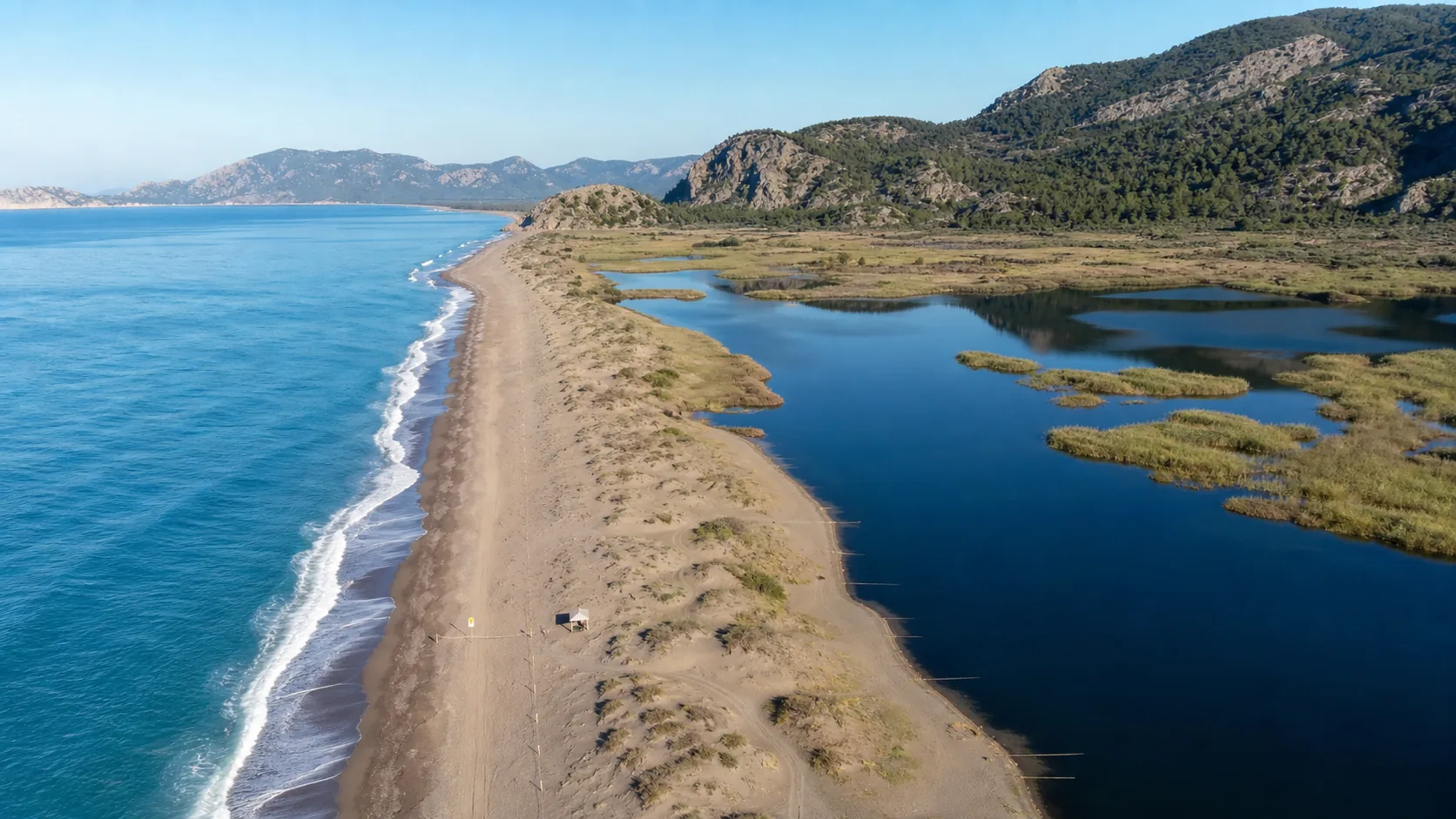
Iztuzu is often introduced as “Turtle Beach,” but its physical role comes first. The long sandy barrier separates the open Mediterranean from the sheltered Dalyan lagoon. Waves move sand on the seaward side; river and lagoon processes shape the inner margin. Wind builds and rearranges dunes. This is not unused land waiting for development: it is infrastructure made by nature.
When the barrier, dune plants and water exchange remain functional, the coast supports nesting turtles, shore life and the lagoon behind it. Protection therefore cannot be reduced to cages around individual nests.
Dunes are living coastal protection
Dune plants survive salt, wind, heat and moving sand. Their roots trap grains and help the dune recover after ordinary weather. Walking repeatedly through vegetation, driving on sand or removing plants creates weak corridors where erosion can accelerate. Use established access points and never treat the dune as a shortcut or photo platform.
Natural material on the strandline may shelter small animals and feed the beach system. Remove human rubbish, but do not “clean” every shell, twig or piece of sea grass as though the coast were a hotel floor.
Nesting habitat needs space and darkness
Loggerhead females require suitable dry sand and a route above the waterline. Hatchlings need an unobstructed, naturally dark path toward the sea. Lights, beach furniture, deep holes, vehicles and crowds can interrupt those movements. A marked nest is a reminder of a much wider habitat.
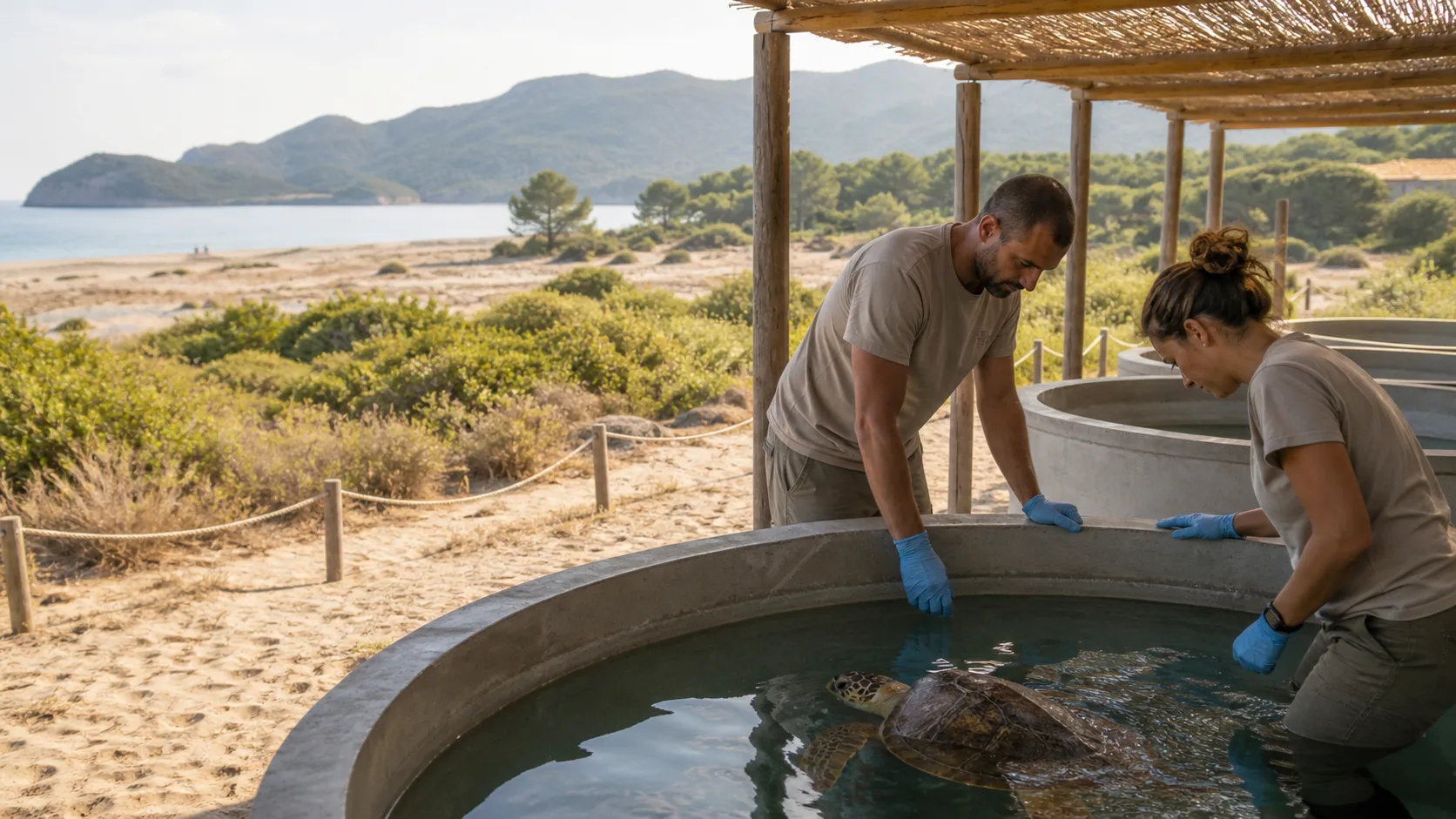
During nesting season, obey current zoning, closing times and staff directions. Do not conduct an independent night search. Never dig around a nest, move a cage or “help” a hatchling unless an authorised conservation team instructs you.
A responsible beach day
- Choose reusable water containers and take all litter away.
- Keep umbrellas and chairs within permitted visitor areas.
- Fill deep holes and remove toys, ropes and equipment.
- Do not feed fish, birds or turtles.
- Use reef-considerate sun protection and avoid spraying products near the water.
- Check live beach and rehabilitation-centre access before departure.
Rules can change with nesting activity, weather and management decisions; a blog cannot replace signs on the beach.
Connect the ecosystem to the journey
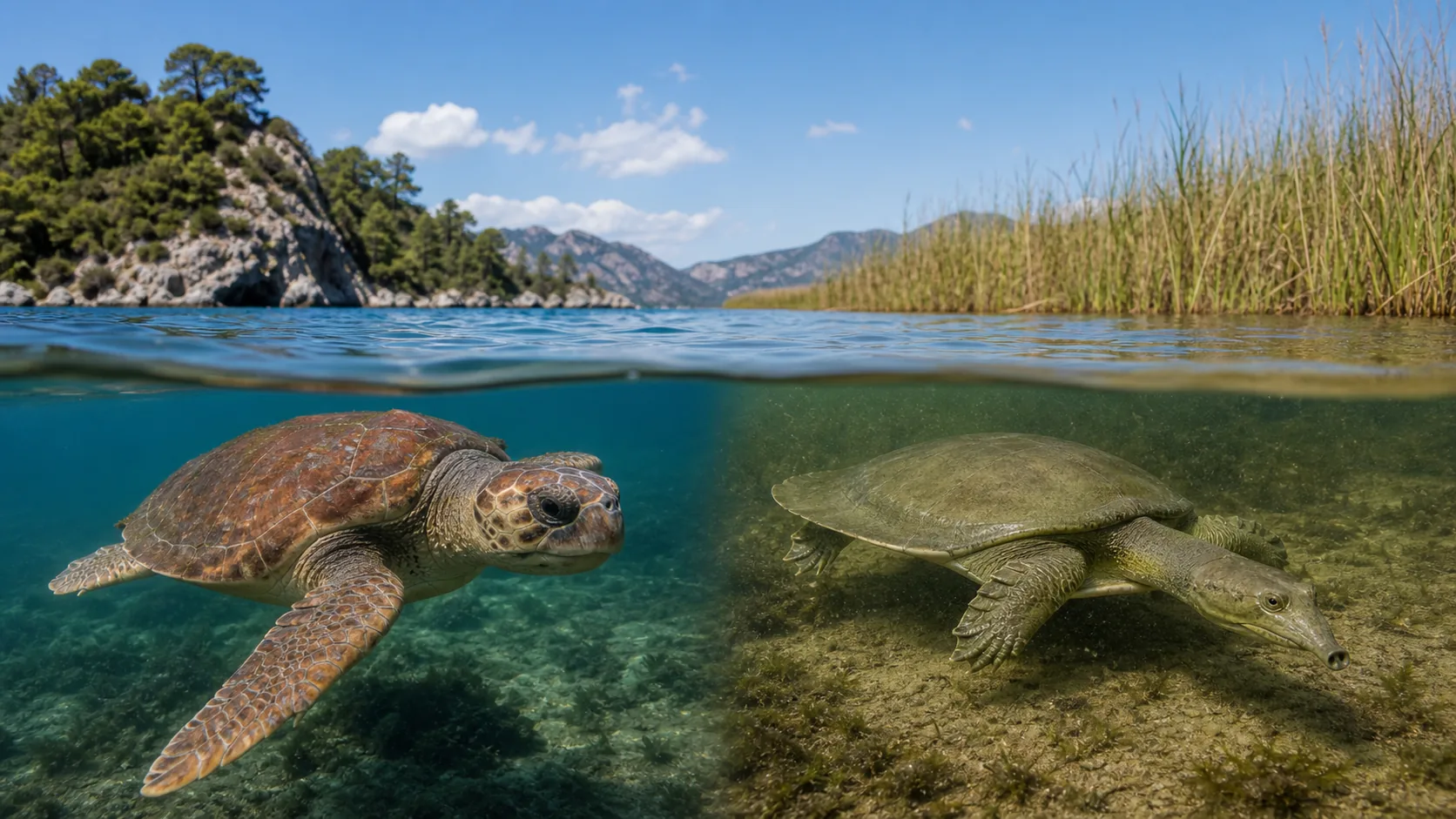
The Iztuzu and DEKAMER trip from Sarigerme adds conservation education, while the Dalyan river programme reveals the lagoon connection. Read the delta wildlife guide to see why both sides of the sandbar matter.
Sources: the Ministry’s protected-area description and DEKAMER protection guidance.
For guests planning a Sarigerme holiday, first-time visitors and travellers comparing local day trips.
Explore the area mentioned in this guide on the map.
FAQ
Is Iztuzu only important because of loggerhead turtles?
No. It is also a dynamic sand barrier and dune system separating the Mediterranean from the Dalyan lagoon.
Why should visitors avoid dune vegetation?
Dune plants trap and stabilise sand; repeated trampling creates weak erosion corridors.
Can I walk the beach at night to find turtles?
Follow current closures and authorised guidance; independent night searches can disturb nesting females and hatchlings.