Why visitors confuse two different turtles
Dalyan joins the Mediterranean to a network of lagoons, reed beds and inland water. A day on the river can therefore cross the habitat of both a marine turtle and a freshwater/brackish-water turtle. Tour language often uses the word “turtle” without naming the species, and a brief head at the surface is difficult to identify. The result is a common but avoidable mistake: every turtle seen from a Dalyan boat is called Caretta caretta.
Correct identification is more than a wildlife quiz. It prevents exaggerated promises and helps visitors understand why the sea, nesting beach and river channel require different forms of protection.
The loggerhead: broad head and hard shell
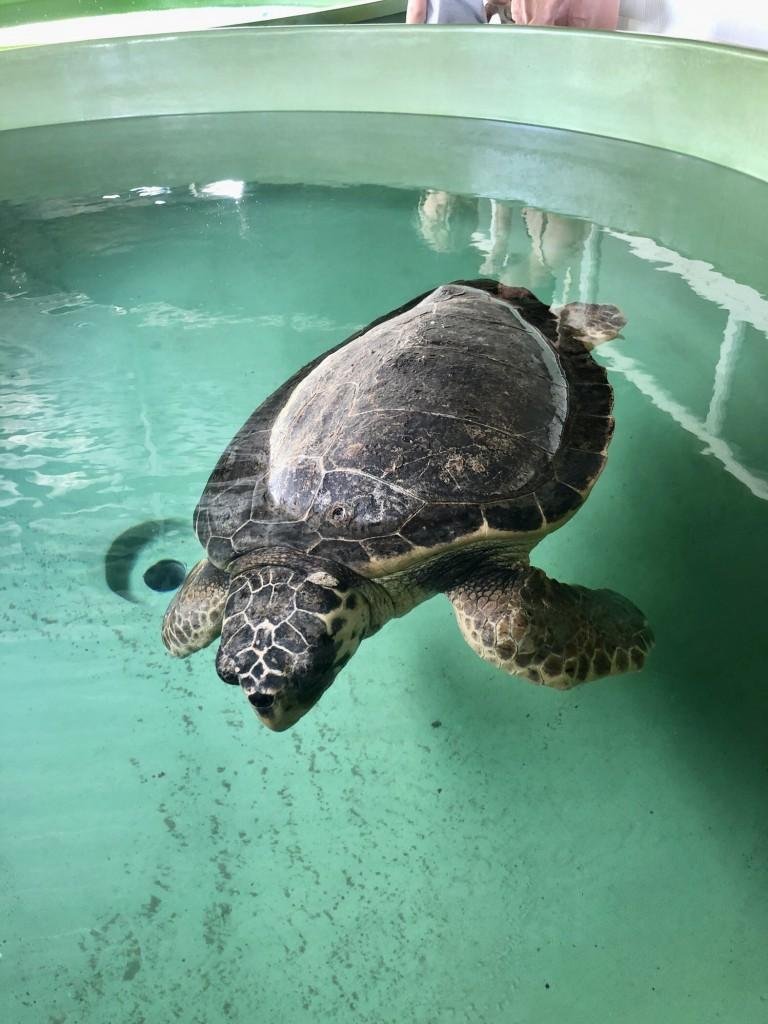
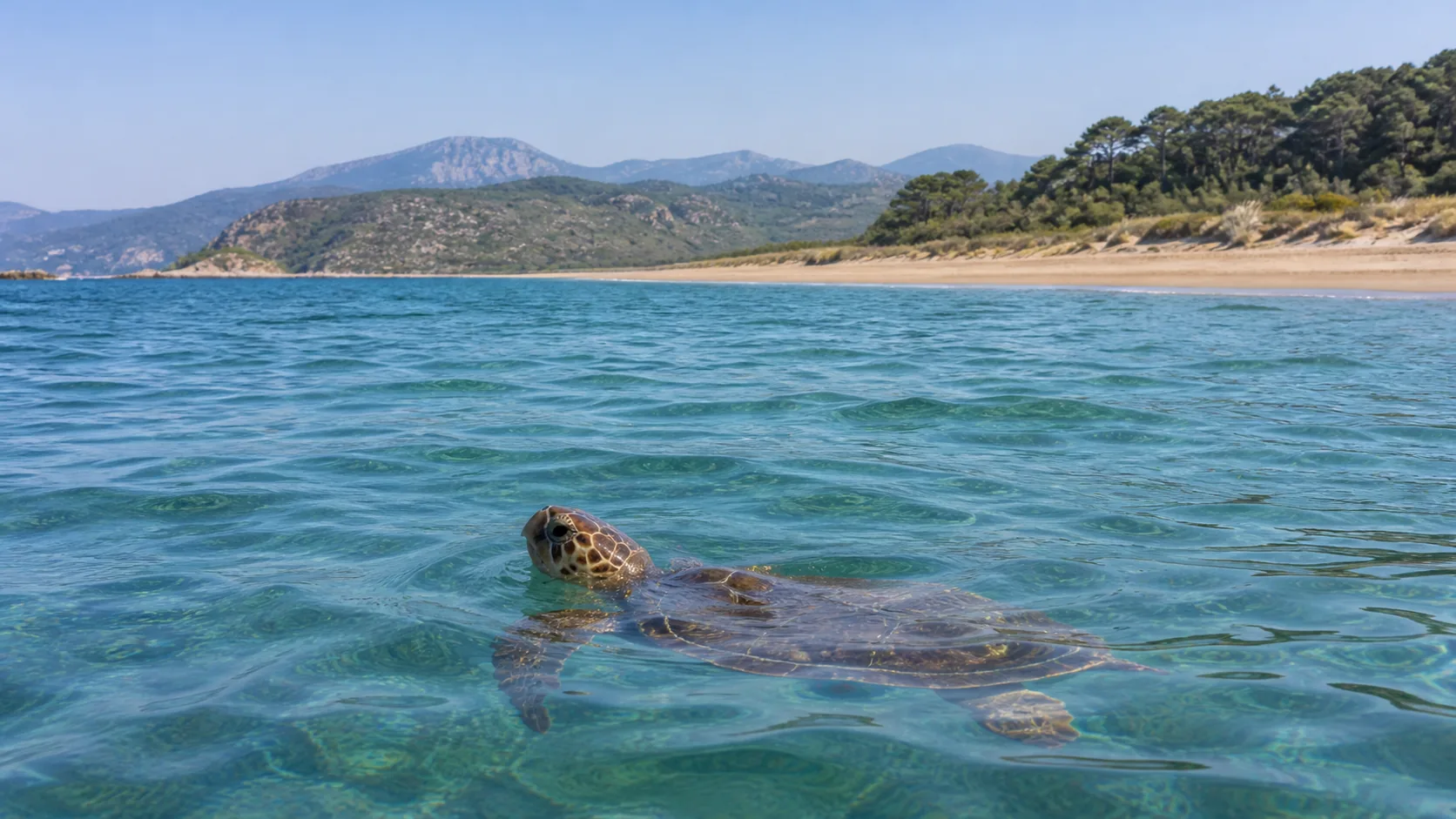
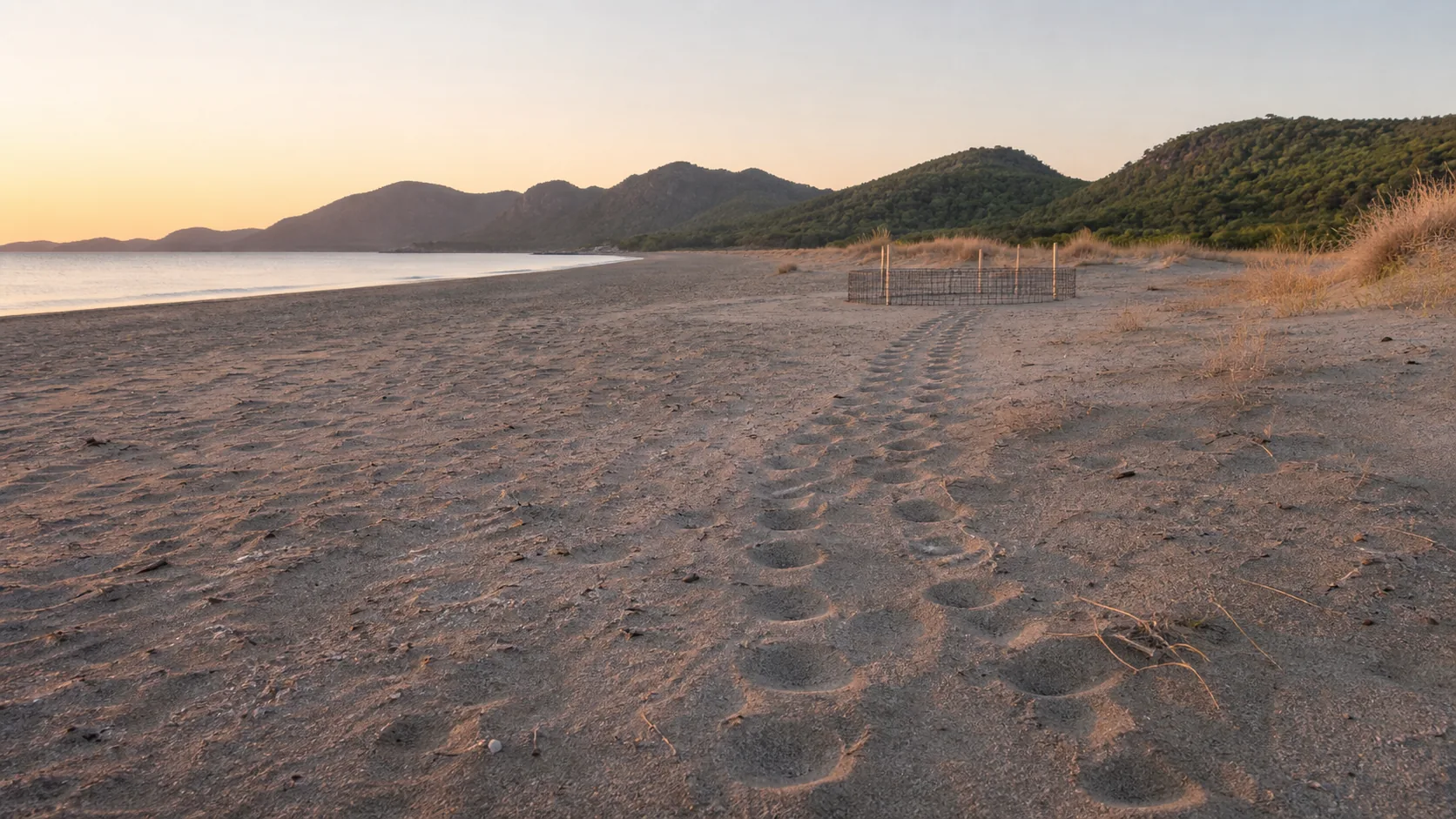
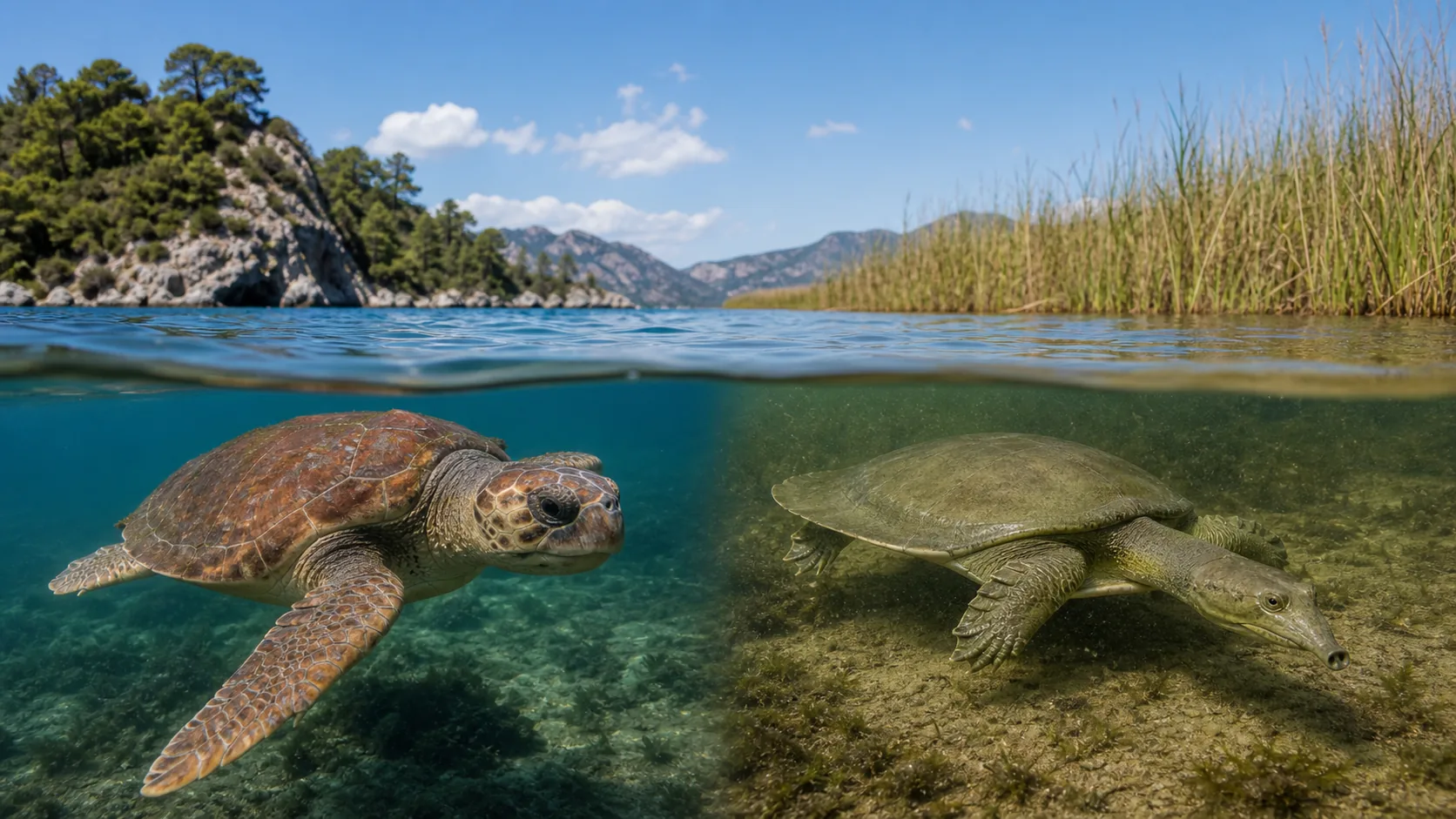
Caretta caretta is a sea turtle with a solid, scuted shell, strong front flippers and the broad head that gives the loggerhead its English name. Its carapace is usually reddish-brown to brown. Adults live and feed at sea; nesting females come ashore on suitable beaches. Sarigerme and Dalyan–Iztuzu are documented loggerhead nesting areas, but seeing a nest does not mean a turtle will be visible during a daytime visit.
Loggerheads must surface to breathe, so a calm observer may occasionally notice a head or shell offshore or in parts of the lagoon. The moment can be short. A boat should not accelerate, turn sharply or chase for a second look.
The Nile softshell: flat, leathery and channel-adapted
Trionyx triunguis has a low, flexible-looking shell without the hard external plates people expect from a turtle. Its olive-grey body, long neck and snorkel-like nose are useful clues. The species uses freshwater and brackish systems and is associated with the Köyceğiz–Dalyan channels. It may surface near reeds or muddy banks and can look surprisingly large.
Historical reports describe tourist feeding used to draw softshell turtles to predictable places. That practice can change natural behaviour, expose animals to poor food and keep them close to heavy boat traffic. Sarigerme Tours content must never promote feeding as a viewing method.
A five-second identification checklist
- Water: open sea and coastal shallows suggest a marine turtle; reed-lined river habitat may suggest a softshell.
- Shell: hard, patterned plates point to Caretta; a flat leathery outline points to Trionyx.
- Head: a broad strong head fits a loggerhead; a narrow extended snout fits a softshell.
- Movement: observe quietly rather than manoeuvring the boat to force a better angle.
These are field clues, not permission to approach. Distance, glare and a short sighting can make certainty impossible.
Plan a nature day without a wildlife guarantee
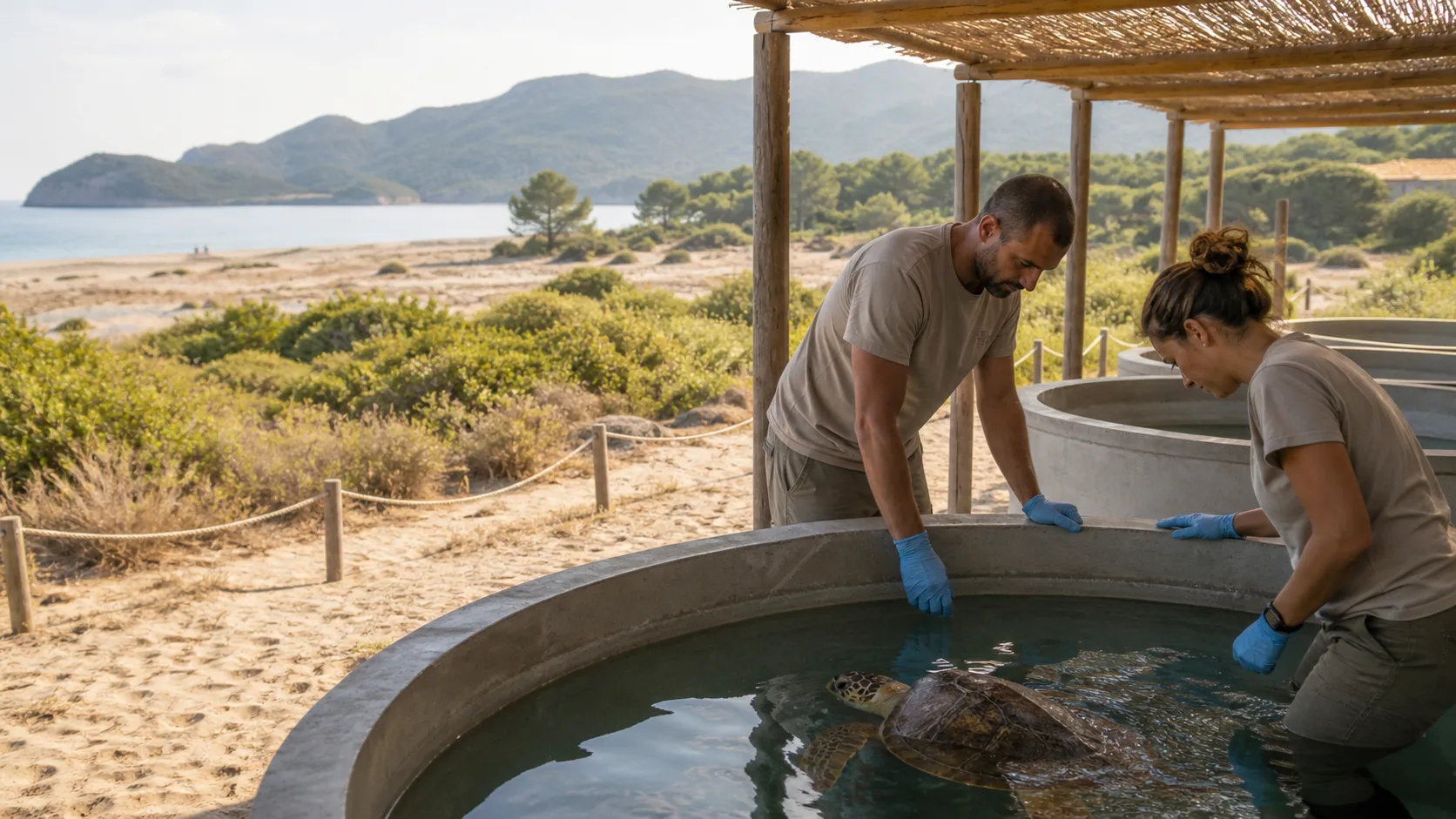
A Dalyan tour from Sarigerme is a journey through river, delta and coastal scenery, not a staged animal show. A focused Iztuzu and rehabilitation-centre day offers a more predictable educational context. In both cases, respect distance and current local instructions.
Sources: the Ministry’s Köyceğiz–Dalyan protected-area inventory, the scientific note on loggerheads in the Dalyan River and the UNEP/CMS viewing guidance.
For guests planning a Sarigerme holiday, first-time visitors and travellers comparing local day trips.
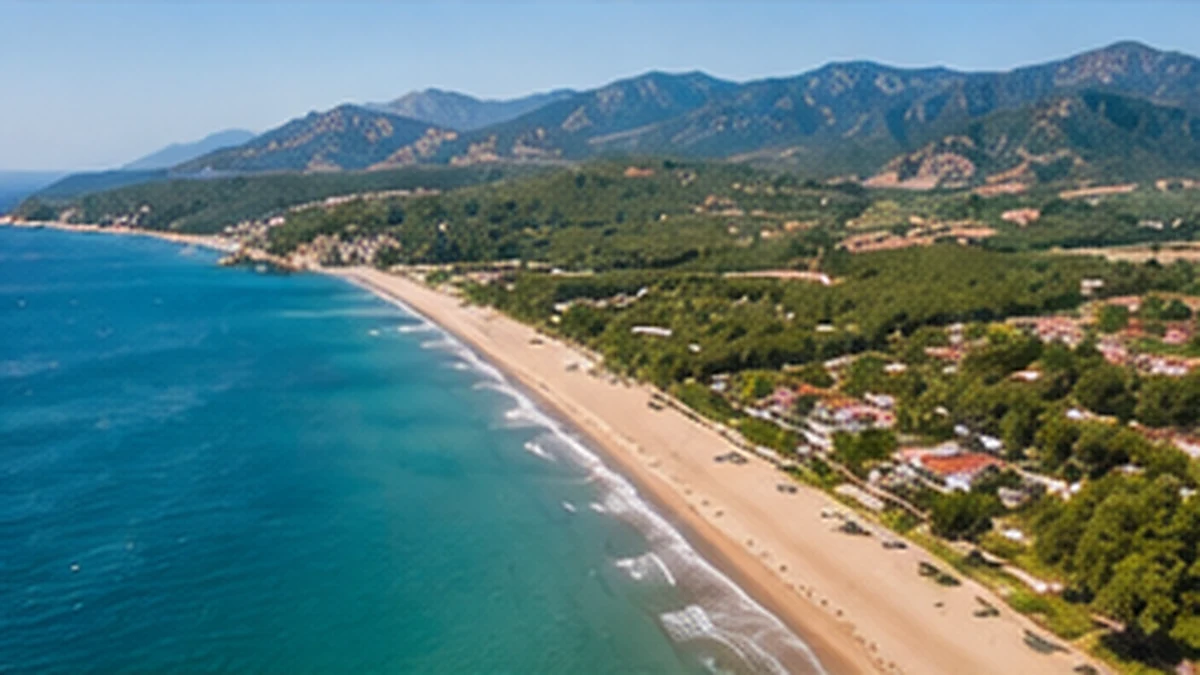
Explore the area mentioned in this guide on the map.
FAQ
What is the easiest visible difference?
Caretta caretta has a hard plated shell and broad head; the Nile softshell has a flatter leathery shell and a long narrow snout.
Do Nile softshell turtles live in the sea?
They are primarily associated with freshwater and brackish systems such as the Dalyan channels, although estuarine conditions are complex.
Should a boat use food to show turtles?
No. Feeding changes behaviour and can draw turtles into areas of boat and propeller risk.